Meet your Wild Pal
My story
Hi there, I'm Trevor. One day I was swimming through the waves, looking for my afternoon meal. The sun was shining, the water was the perfect temperature, and I saw a big group of jellyfish that looked like the perfect snack. I swum right up, and took a massive bite – MUNCH! Eugh, yuck! Only to realise I'd taken a big bite of a plastic bag. I accidentally swallowed the plastic, and it travelled all the way to my tummy. I don't know what to do! Will you help me?
Mini Vet Mission:

Tap the icons
Use your Mini Vet kit to look after Trevor.
Check his vitals
A Koala’s heartrate is usually between 60 and 140 beats per minute.
Use your stethoscope from your Mini Vet Kit to check its heart rate.
Do some scans
To see the plastic inside a turtle's body, Veterinarian staff take an X-ray or CT scan and inspect the animal's body.
Feel your turtle's tummy to see if you can feel plastic inside.
Monitor his poo!
When the plastic is small enough, turtles can naturally excrete or poo out the plastic they've eaten.
Keep an eye on your turtle Wild Pal to see if the plastic comes out in their poo.
Rest and recover.
It’s nice to care for animals, but it’s good to give them space and let them rest.
Keep your turtle near a nice pool of water where there’s no plastic pollution.
Thanks for looking after me!
Turtles around the country are lucky to have Mini Vet’s like you looking after them! You can carry them around in your Mini Vet pack and bandage them up. Injured animals generally like warm, dark spaces to rest and recover in – so make sure you keep your Mini Vet pack in tip-top condition.
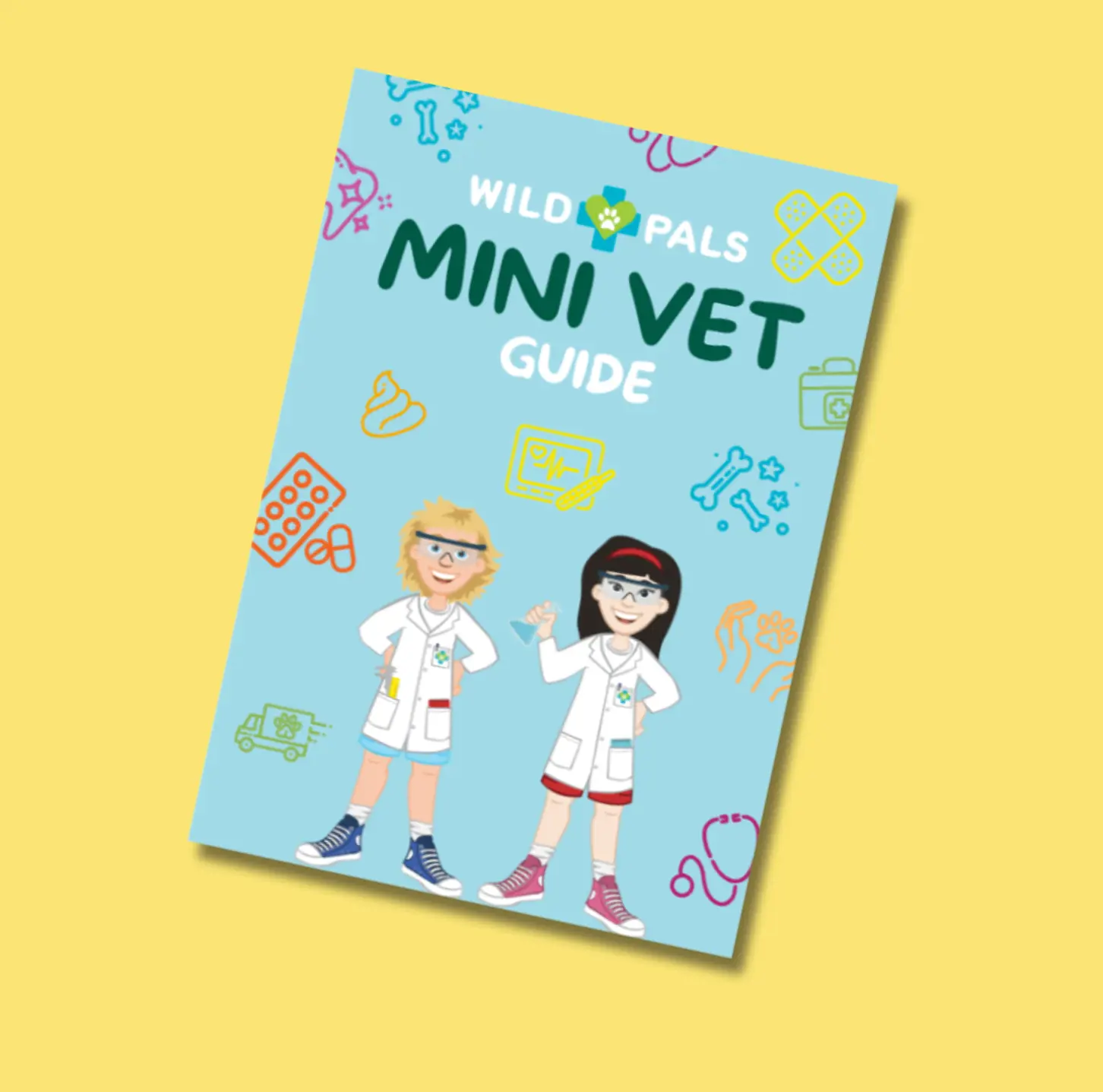
Your Mini Vet guide!
This mini vet guide has all you need for taking care of your animal! Sign up and receive it for free.